
Inspiring sustainable change through art and education
Sarah McCarrison | Alumni News | Massey.ac.nz
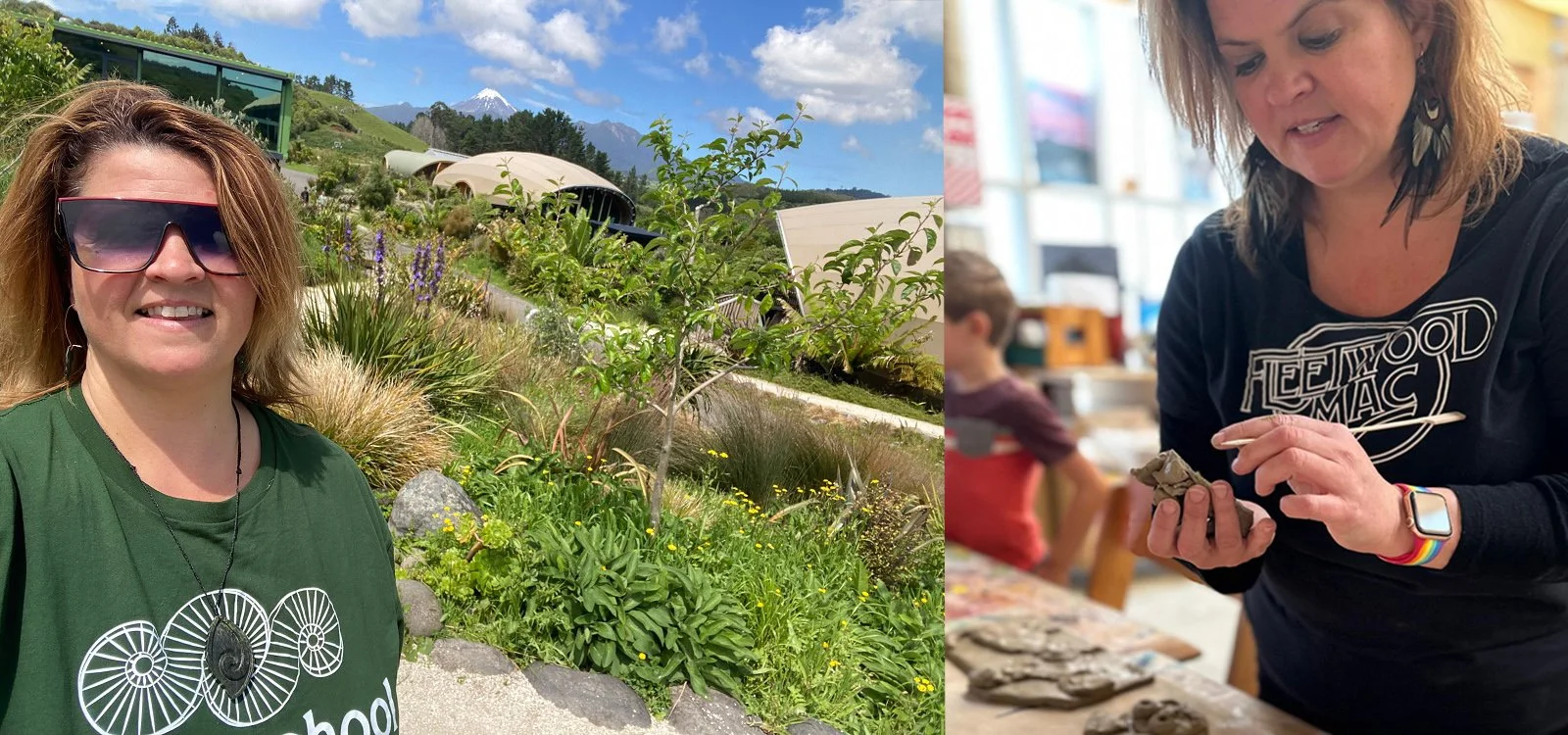
Originally from New Plymouth, Taranaki, alumna Sarah McCarrison’s path has taken her across continents, from the Australian Outback to the classrooms of China and Singapore, and back home again to teach at Green School New Zealand. For her, education has been a journey of creativity, connection, and purpose.
“I was born here in New Plymouth,” Sarah says. “My family were keen travellers, so when I was about two, we moved to Canada for a couple of years. That early experience never really left me.”
Growing up in Taranaki meant a childhood close to nature. “We were always outside for hiking, swimming and exploring. I still have really fond memories of this place,” she recalls.
Teaching the world
Art came first. Sarah studied for a Bachelor of Fine Arts at Otago Polytechnic. “I’ve always loved the visual side of storytelling; art changes how we see.” Later, she moved into education with a Postgraduate Diploma at Edith Cowan University in Australia.
Her first classroom was far from home, in a remote mining town of Western Australia. “I won a scholarship through the Chamber of Minerals and Energy,” she says. “It took me to a very isolated Outback community where I taught a mix of local and Aboriginal students. It was challenging but also deeply rewarding. I learned so much about culture, resilience, and community.”
After several years in Perth, Sarah and her partner decided to try international teaching. Their first stop was Nanjing, China. “A city I’d never heard of that turned out to have nine million people,” she laughs. “We absolutely loved it.” They later moved to Beijing, spending nearly nine years there before relocating to Singapore in 2018.
In Singapore, Sarah joined United World College of South East Asia, one of the region’s leading international schools. She taught visual arts and became Head of Middle School Art, then moved on to be the Head of Middle School Service and Sustainable Development, a role that opened new doors.
“I supported students and teachers in creating environmental and social initiatives. I facilitated school-wide systems to reduce waste through composting and paper recycling, and coordinated community outreach projects, including visits to rest homes, collaborations with the Down Syndrome Association and Singapore’s MINDS to promote inclusivity, and partnerships with NGOs across Asia.”
Students also took part in service trips to Cambodia, India, and Vietnam, where they worked with local schools and environmental groups. “We’d travel with donations, fundraise, and build ongoing partnerships. We even worked on coral reef restoration projects in Indonesia,” she says. “It was an amazing time! It taught me what education can look like when connected to real life.”
Coming home
When the pandemic began, Sarah and her family made the decision to return to New Zealand. Coming home to Taranaki felt like a full circle. She soon joined Green School New Zealand, which is designed around environmental education and holistic learning.
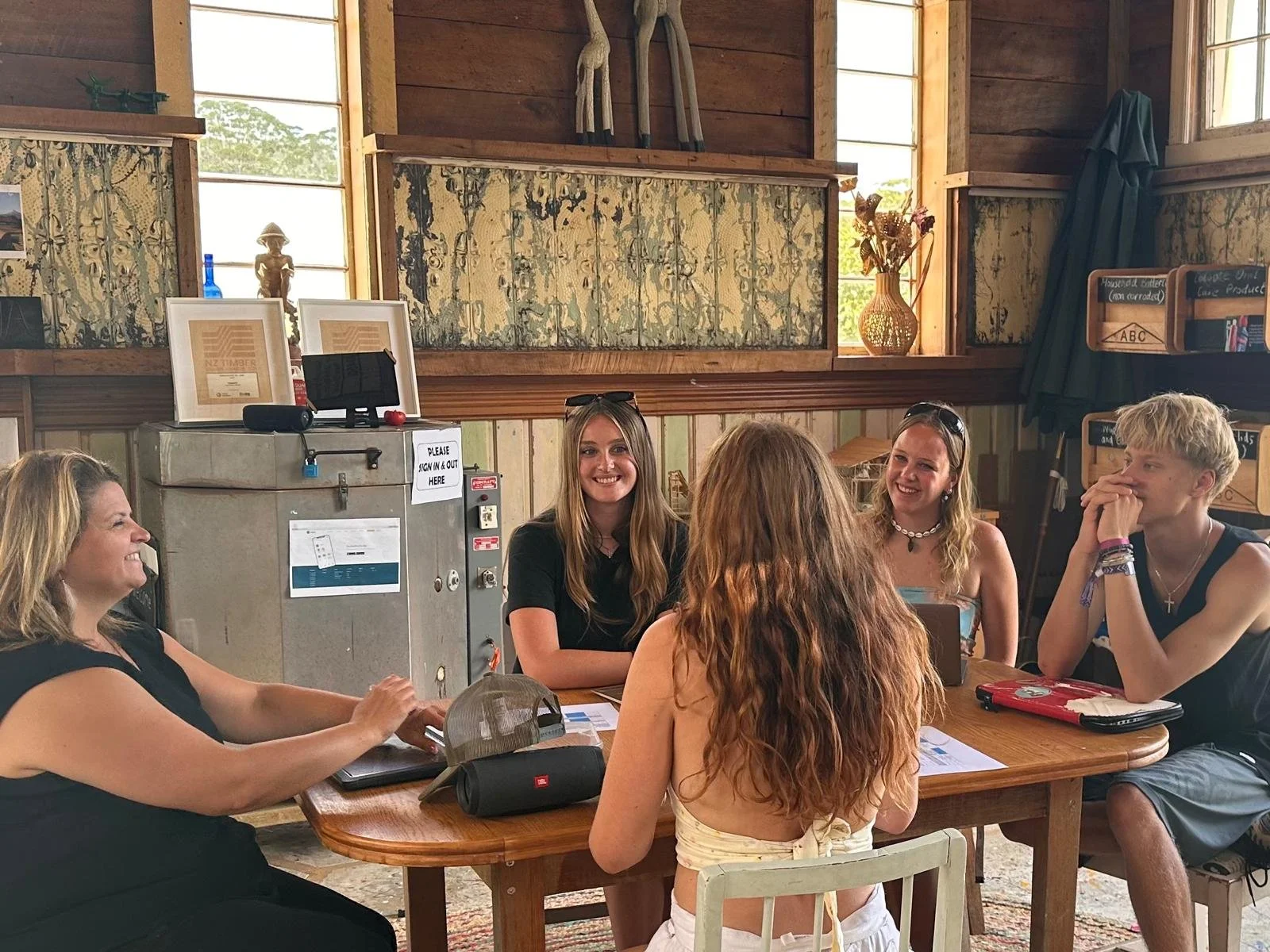
“I’ve been at Green School for four years now,” she says. “It’s a really unique environment and our learning is experiential and deeply connected to sustainability.” Her role is multifaceted. She teaches Visual Arts, coordinates careers pathways and overseas learning trips, and serves as the Child Protection Officer. “I have worn a number of hats. At Green School, we have a saying, ‘flex like flax,’ which is very true for the many roles I have tried.”
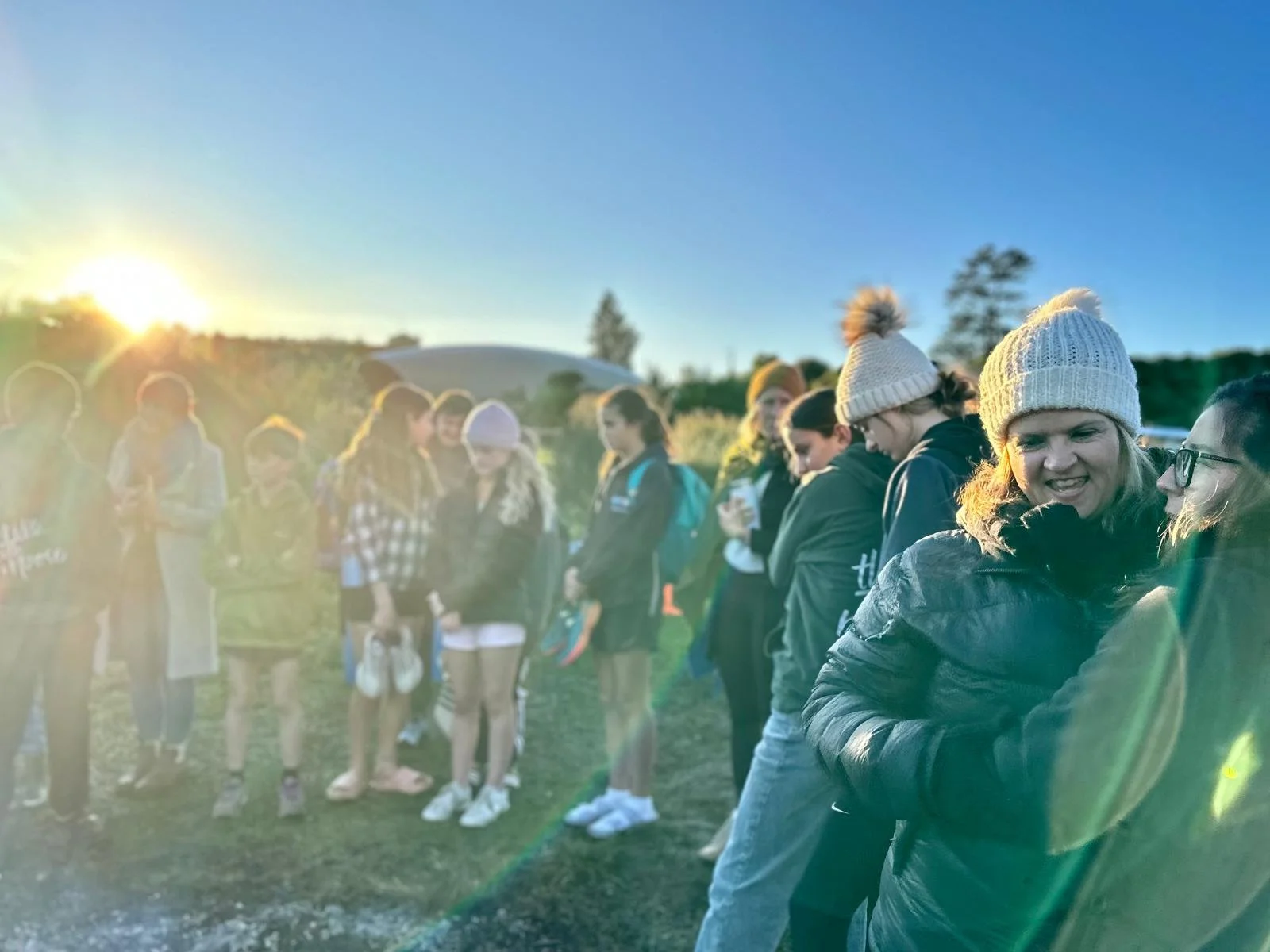
At Green School, Sarah helps students link creativity with purpose. “We often take art outdoors, drawing at the beach, using natural materials and visiting local artists,” she says. “Art can be a form of activism. It gives students a voice.”
One initiative she’s particularly proud of is the Greenstone Capstone Project, a year-long programme where senior students design projects that make a real impact. “They spend a whole year exploring something they care about, it might be mental health, inclusivity, or environmental innovation,” she explains. “One student designed sustainable fishing lures; another created a podcast about teen mental health; another worked on solar-powered energy solutions for the campus. It’s about empowering young people to act for change.”
A leader who keeps learning
After decades in education, Sarah wanted to strengthen the theoretical foundation of her leadership. This led her to specialise in Educational Administration and Leadership for her Master of Education at Massey University.
“I’d had a lot of practical experience, but I wanted to deepen my understanding of leadership and pedagogy,” she says. “Massey gave me that – it helped me reflect on what good leadership really means in a modern educational setting.” Through her studies, she explored areas such as change management and the difference between leading and managing. “Education is constantly evolving. Having the tools to support colleagues through that change, and that’s essential.”
Her final research project connected directly to her passion for sustainability. “I looked at how school leaders who care about environmental education influence their communities,” she says. “It helped me see how leadership vision, or the lack of it, can shape whether sustainability actually takes root in a school.”
She also noticed how government priorities can make this work harder. “There’s a lot of focus on literacy and numeracy, which are obviously important, but it means environmental education isn’t always consistent. It depends so much on whether a school’s leaders value it,” she notes. “At Green School, we’re lucky that sustainability is at the heart of what we do.”
Global lessons
Sarah’s years in Asia gave her a truly global perspective on education. “Working in China and Singapore exposed me to different systems, each with strengths and challenges,” she reflects. “Overseas, there’s often more funding for professional development and innovation. But here in New Zealand, we do incredibly well in areas like well-being and cultural connection. We can be proud of that.”
She also values the Enviroschools network and the recognition of indigenous perspectives in environmental learning. She believes that those things make New Zealand special, to help us find our own voice in sustainability.
Although teaching is at the heart of her career, Sarah continues to see herself as an artist. “I still create my own work and explore environmental themes. It keeps me grounded and helps me connect with my students. When they hit a creative block, I know exactly how that feels.” She encourages her students to exhibit their work and curate their shows. “It’s not just about technique; it’s about confidence, storytelling, and expressing who they are,” she adds.
After decades of experience across cultures, Sarah’s advice to educators is simple but powerful. “Don’t stop learning, as everything is changing. Technology, global challenges, and even the skills our students will need for jobs don’t exist yet. The best thing teachers can do is stay open and adaptable.”
“I tell my students that art isn’t just something you make; it’s something you live. The same goes for education. It’s not about teaching what to think, but how to care, create, and contribute.”